
Canadian Douglas fir 45x70 mm square timbers, Grade A/B
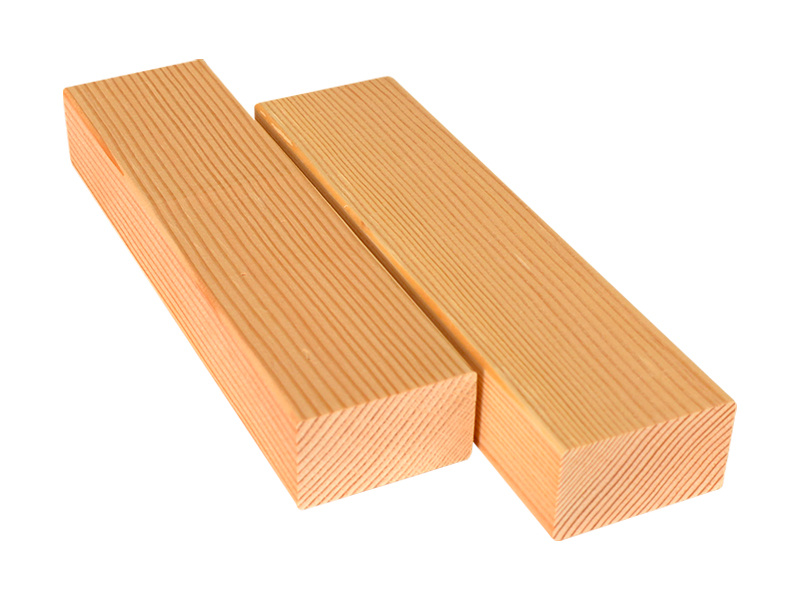
Canadian Douglas fir sub-base beams,
grades A/B,
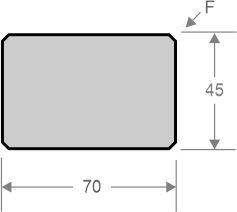
dimensions: 45 × 70 × 2400–6100 mm,
profile: smooth on both sides


Detailed Description

Genuine Canadian Douglas fir, grade A/B, 45x70 mm square timber
Wood species: Canadian Douglas
fir
Botanical name: Pseudotsuga menziesii
Origin of timber: Canada
Dimensions: 45x70x2400–6100 mm
Weight: 530 kg per 1
m³
Durability class EN350: 3
Finish: KD
kiln-dried
Grade: A/B, knotty
Packaging: 4 pieces per pack
Profile: square timber
Specification points
We import Douglas fir from British Columbia
The true Canadian Douglas fir (botanical name Pseudotsuga menziesii) is the second-tallest conifer in the world after the coast redwood, and has made British Columbia famous as a source of exceptionally high-quality timber. Douglas fir grows from the northern half of the province to north-western Alberta, extending as far north as the Queen Charlotte Islands. Tall Douglas fir trees with wide trunks and few branches provide a fine-grained, clear-grained timber in long lengths for the manufacture of a wide range of high-strength construction products.
European versus Canadian Douglas fir
In Europe, this tree species has been cultivated since 1827, when its seeds were brought to Scotland by the botanist David Douglas. Since then, thanks to its rapid growth, it has spread widely throughout Europe. It is important to note, however, that due to their rapid growth and the completely different climatic conditions, European Douglas firs do not possess the unique properties and quality of the timber from the long-lived Douglas firs grown in British Columbia. Thanks to their rapid growth, European Douglas firs are used for rapid afforestation. The Douglas firs we supply come from British Columbia and are sourced from long-lived trees.
The tallest long-lived trees in the world
The Canadian Douglas fir is the second-tallest conifer in the world after the coast redwood. Canadian Douglas fir trees commonly reach heights of 60–75 m and above. In old-growth stands, trees with a trunk diameter of around 2 m are common. The maximum height is usually 100–120 m with a diameter of 4–6 m; these are the highest documented values. The tallest Douglas fir ever discovered was felled; it measured 133 metres and was thus the tallest upright-growing tree ever found. Douglas firs commonly live for more than 500 years, and some specimens for more than 1,000 years.
Beautiful wood grain, colour and weathering
Douglas fir is the most abundant coniferous species in British Columbia, characterised by its strength, rigidity and durability. Spring and summer growth rings show a distinct difference in colour. Summer growth rings have darker, distinctively coloured borders. These colour transitions between individual growth rings, which are characteristic of Douglas fir, are particularly visible in flat, tangential cuts. Douglas fir boasts remarkable uniformity of appearance. Thanks to its straight grain and overall orange colouring—which stems from a blend of creamy yellow and reddish-brown—it can impart either a rustic or a strikingly modern appearance. Wood is a natural material with a natural range of colour tones. Colour variations are characteristic of wood and are permitted. Wood weathers and changes its original colour under the influence of UV radiation, climate and humidity. In a dry environment, it takes on a greyish hue, whilst exposure to moisture or atmospheric pollutants will cause it to blacken and change colour to a darker shade. The duration and extent of weathering depend on the method of treatment, the location, local conditions, roofing, the wood’s exposure to the elements and other factors affecting the wood.
Natural durability
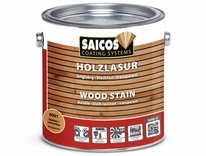
Thanks to its high content of protective substances, Douglas fir offers natural resistance to decay and weathering. Consequently, depending on the project and intended use, this timber can be left untreated. Thanks to its durability class, it can be used for outdoor projects without direct contact with the ground. Douglas fir has proven to be more than just an attractive timber. Its durability and resistance to rot and insects make it a popular choice for outdoor projects such as verandas, decking and cladding. It is also naturally resistant to rot, decay and insects. To enhance its durability, it is recommended to treat the wood’s surface with a suitable water-repellent coating. You will achieve excellent results with Saicos natural wood oils. With Saicos oils, you can choose from both colourless and coloured pigmented shades with enhanced UV protection.
Properties
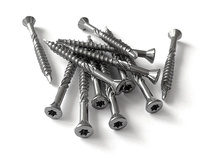
Douglas fir dries quickly and evenly during processing. It remains straight during drying. The wood is stable and has good resistance to decay in its natural state. Douglas fir is easy to work with using power tools and can be nailed, screwed or glued with ease. Douglas fir takes most paints and stains well and easily. In terms of bending strength at the level required by structural specifications, Douglas fir exhibits greater strength than radiata pine. Douglas fir is valued for its excellent strength and reliability. Douglas fir is known primarily for its tough fibres and dense grain structure. As with all other timber species exposed to the elements, Douglas fir may develop drying cracks due to moisture absorption and drying out. Longitudinal cracks and end cracks may form on its surface, depending on outdoor climatic conditions. Avoid contact between the timber and metal or metal dust, which causes blue-black stains on the timber. Use only stainless steel fasteners when working with or securing the timber.
Wide range of applications
Douglas fir timber has a wide range of applications and is a timber species that has long been tried and tested by designers and builders, particularly for structural purposes. Due to its natural weather resistance, Douglas fir is widely used for outdoor applications such as cladding, fences, terraces, as well as interior cladding, roof trusses, beams, columns, railway sleepers, house frames and a range of other areas where structural strength is paramount. As Douglas fir offers high strength, it is suitable for gluing and is therefore commonly used in the manufacture of glued structural profiles. Thanks to its stability, durability, attractive appearance and ease of working, Douglas fir is suitable for the manufacture of window and door frames, mouldings, cupboards and other joinery products. The hardness, strength, stability and durability of Douglas fir are utilised in the industrial sector for the manufacture of tanks, vats and storage containers.
Medicinal extracts from Douglas fir
Douglas fir contains essential oils which are used in aromatherapy for their antibacterial effects, to treat arthritis and renal asthenia, in skin and other compresses, and for mouthwashes.
Responsible timber harvesting
Intensive forest conservation efforts in British Columbia focus on reforestation, responsible timber harvesting and the care of the forest, which is a precious resource that must be carefully managed and continuously renewed. Today, modern Forest Stewardship practices are in place, which ensure a natural environment for young Douglas fir trees and provide the conditions necessary for growth and reforestation.
Storage
When storing timber prior to and during installation, ensure that it is not exposed to direct sunlight, rain, snow or other external influences. It should be well covered or, ideally, stored in covered, unheated areas, with relative humidity levels matching those of
the
outdoor environment. At the same time, ensure that the timber is adequately spaced with spacers to allow for air ventilation and prevent the formation of mould. Failure to follow these recommendations may result in warping, deformation or other changes to the timber during storage.
Download

Demand
We will show you our products before purchase in our warehouse. Wood is a natural material, each piece is a unique original. The supplied wood will be different from the displayed photos and samples.
Call us on +420 220 879 443
Payment options:
- Cash or a card at the store
- Cash on delivery (you pay when picking up the goods to the courier in the Czech area only )
- By bank transfer (we will send the goods immediately after the amount has been credited to our account)